
Scenario:
Thoroughbred Aftercare
This module offers an overview of Thoroughbred aftercare in the U.S., equipping industry participants to address public concerns around retirement, rehoming, and slaughter. It highlights key reforms, showcases leading programs, and provides practical tools to communicate progress and accountability.
Fact Sheet
The thoroughbred: An athletic breed
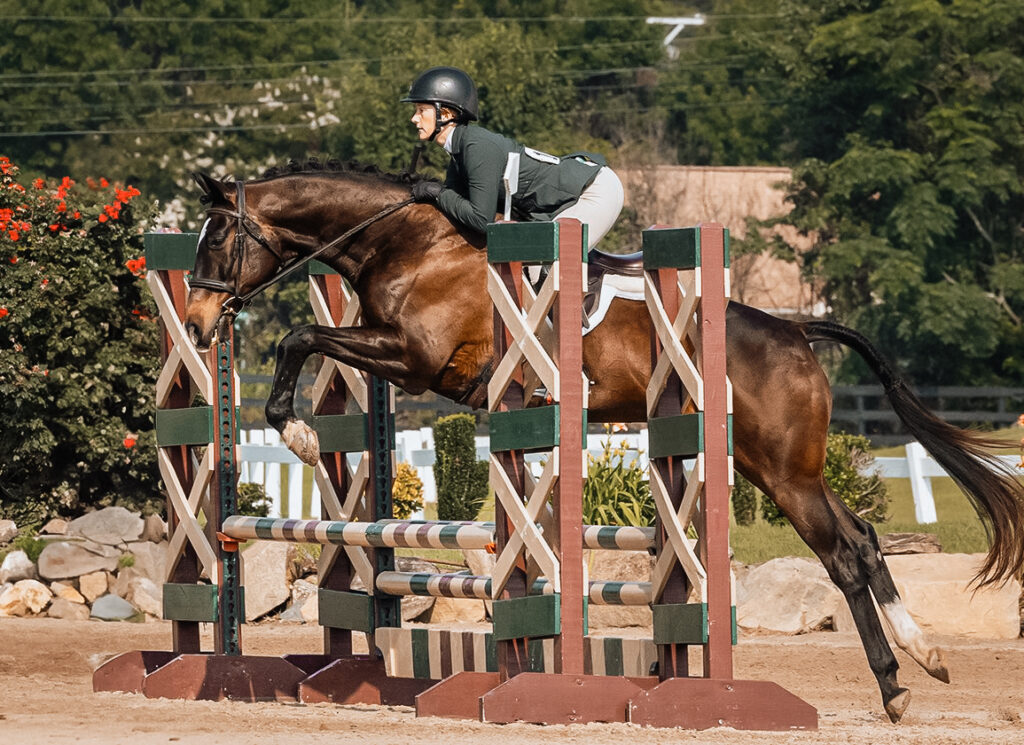
Thoroughbreds are one of the most athletic, versatile horse breeds in the world.
Bred for stamina, agility, and intelligence, they possess the physical and mental traits that make them highly adaptable across a wide range of post-racing careers. Their responsiveness to training and strong work ethic means that, with appropriate retraining, many go on to thrive in second careers, such as:
Eventing and show jumping
Polo
Therapy and equine-assisted programs
Pleasure and trail riding
Mounted police and ranch work
Aftercare expansion: A wide range of initiatives
Aftercare in U.S. Thoroughbred racing has evolved into a nationwide network of retraining, sanctuary, and safety-net programs, most run by independent nonprofits, supported increasingly by industry-backed funding mechanisms.
While funding and long-term traceability challenges remain, the growth of accredited charities and collaborative initiatives signals real progress toward a more ethical, sustainable retirement culture.
Examples of aftercare programs and initiatives
Thoroughbred Aftercare Alliance (TAA)
The TAA is the cornerstone of U.S. aftercare, accrediting over 80 organisations through rigorous standards in care, transparency, and facility management. Since 2012, TAA has distributed $36+ million, funded through a mix of track fees, sales levies, and voluntary contributions.
New Vocations Racehorse Adoption Program
One of the largest and most established retraining organisations, with facilities in KY, OH, LA, NY, and PA. Has rehomed over 8,000 Thoroughbreds into second careers across disciplines like show jumping, trail, and dressage.
Thoroughbred Retirement Foundation (TRF)
Pioneers of the Second Chances Program, placing retired racehorses with inmates at correctional facilities for mutual rehabilitation. One of the longest-running aftercare groups, the TRF also offers permanent sanctuary to horses unsuitable for rehoming.
The Retired Racehorse Project (RRP)
Hosts the annual Thoroughbred Makeover, the world’s largest OTTB retraining competition. Also produces educational materials, clinics, and videos that help first-time OTTB owners succeed in second-career transitions.
California Retirement Management Account (CARMA )
A model safety-net program in California. Funded by a mandatory per-start fee, CARMA supports retraining programs and maintains a placement fund to help at-risk horses transition safely after racing.
The TAKE2 Second Career Thoroughbred Program
Funds OTTB prize money in hunter and jumper classes across the U.S., encouraging OTTB visibility in mainstream show rings. Also tracks Thoroughbreds in second careers and promotes responsible placement.
Thoroughbred Placement Resources (TPR)
A Maryland-based charity that focuses on emergency intervention and placement for at-risk horses. Actively engages in kill-pen rescue, medical triage, and owner education to reduce the likelihood of horses falling through the cracks.
Mareworthy Charities
Mareworthy provides lifelong sanctuary for retired broodmares, a group at risk of being overlooked after their breeding careers end. The program focuses on education, adoption, and advocacy – raising awareness of their value beyond the breeding shed and giving these mares a dignified, well-supported second chapter.
Next steps: What's next for aftercare
While the aftercare landscape has evolved significantly in the last decade, the next chapter demands more funding, deeper integration, better data, and stronger safety nets.
Ultimately, the goal is to make aftercare not just a moral obligation, but a fully embedded and professionally supported part of the racing ecosystem.
Areas of focus
Sustainable funding is an ongoing challenge
Most aftercare organisations operate on very thin margins, reliant on donations, auctions, and grants that fluctuate year to year. Yet the demand for their services is constant and growing, especially as the industry improves its retirement culture and accountability.
While there’s still a long way to go, aftercare is increasingly being recognised as a core responsibility of the racing ecosystem – with a growing number of industry leaders working to ensure it becomes a sustainably funded and fully integrated part of the sport.
More robust safety nets
Even the most responsible rehoming can be undone by hardship and without contingency plans, some horses find themselves at risk.
That’s why the industry is working to build stronger safety nets to catch horses when plans fail. Several programs already step in to help, from emergency funding to crisis placements, however there is still work to be done to protect every thoroughbred.
Slaughter is illegal, but export for slaughter is still an issue
Horse slaughter is already illegal in the United States, however horses can still be legally exported to Canada and Mexico for slaughter. That’s what the 2025 SAFE Act aims to close by permanently banning the slaughter of horses (of any breed) for human consumption both within U.S. borders and through export.
While this is an issue for the whole equine industry, not unique only to Thoroughbreds, the racing industry is stepping up. A growing coalition – including The Jockey Club, Breeders’ Cup, NYRA, Del Mar, and the Jockeys’ Guild – has partnered with welfare groups through the Final Stretch Alliance to End Horse Slaughter, backing the SAFE Act and calling for a true nationwide ban.
Progress is real: slaughter exports have dropped nearly 90% since 2012, falling from more than 166,000 to just 19,000 horses in 2024, the lowest number in over 45 years. But the goal is zero.
Traceability progress
Traceability remains a major challenge in aftercare. While many Thoroughbreds are responsibly rehomed after retirement, what happens in their second or third home is often unknown.
Since 2017, The Jockey Club has required all registered Thoroughbreds in the U.S. to be microchipped, enabling faster, more accurate identification throughout a horse’s life.
Digital tools like the Equine Management System (EMS), Thoroughbred Connect, and online adoption contracts are increasingly used by aftercare organisations and owners to flag horses in need and monitor their whereabouts.
While a mandatory, national tracking system is not yet in place, these platforms represent meaningful steps toward a more connected welfare system. Several industry working groups are exploring solutions, from improved technology integration to standardised protocols across jurisdictions.
Key Messages
Industry commitment to welfare
The racing industry is increasingly focused on supporting safe, responsible retirements for racehorses. Since 2012, the Thoroughbred Aftercare Alliance alone has provided over $36 million in funding to accredited aftercare charities.
The scientific and regulatory consensus in the U.S. is that racing a well-prepared 2-year-old is an acceptable practice backed by data, with the caveat that trainers must introduce young horses to racing cautiously and individually, as not every horse develops at the same rate.
Support to ending horse slaughter
Industry groups are advocate for laws like the SAFE Act to permanently ban horse slaughter and ending their export for that purpose abroad.
Bipartisan lawmakers, animal welfare advocates, and key figures in the racing industry are rallying behind the 2025 SAFE Act. The bill would ban the transport of horses across U.S. borders for slaughter, closing the final legal gap.
Major racing organisations like The Jockey Club, Breeders’ Cup, and the Thoroughbred Aftercare Alliance are publicly supporting the legislation, making it clear that the sport has no place for slaughter in its future.
Zero tolerance for cruelty
Abuse or neglect of Thoroughbreds isn’t just frowned upon, it’s a violation of racing rules and, in many cases, criminal law.
All racing states have regulations prohibiting cruelty and animal cruelty laws apply equally to racehorses, with penalties including criminal charges. Acts of abuse such as excessive force, mistreatment during transport, or poor care, can result in fines, suspensions, loss of license, and referral to law enforcement.
Many aftercare organisations require contracts prohibiting horses from being sold to slaughter or subjected to inhumane treatment, with ownership checks and legal recourse if terms are violated.
Possible Questions
What happens to racehorses when they retire?
When Thoroughbreds retire from racing, their future paths vary based on their condition, temperament, and connections. Many transition into second careers such as eventing, dressage, polo, pleasure riding, therapy programs, or riding schools. Some enter breeding programs, and others receive permanent care in sanctuaries when rehoming isn’t an option.
Across the industry, structured aftercare has become more organised and impactful. The Thoroughbred Aftercare Alliance (TAA) now accredits over 80 organisations, distributing more than $36 million in grants since 2012. Those accredited charities have collectively retrained, rehomed, or retired approximately 18,500 Thoroughbreds across North America.
While not all retirees enter formal programs, as some are placed directly in private homes or farms, these accredited efforts provide critical infrastructure for assessment, rehabilitation, training, and adoption. The goal remains a stronger safety net with broader visibility and accountability for every Thoroughbred after their racing career concludes.
Is it true that racehorses are often sent to slaughter?
No, the majority of racehorses are not sent to slaughter.
Horse slaughter is banned in the U.S. and the industry is actively working to eliminate the risk of this outcome entirely.
In 2012, more than 166,000 U.S. horses (all breeds) were exported for slaughter. By 2024, that number dropped to around 19,000, a nearly 90% decrease.
Thoroughbreds represent only a portion of those numbers, but even one is too many, and the racing industry is taking action.
In 2025, the industry threw its weight behind the SAFE Act, bipartisan federal legislation that would permanently ban the export of horses for slaughter. It’s already illegal to slaughter horses in the U.S., but this bill would close the loophole that allows shipment to Canada and Mexico.
The bill is backed by major groups like The Jockey Club, Breeders’ Cup, TOBA, NYRA, Del Mar, and the Jockeys’ Guild, alongside animal welfare organizations, an alignment showing just how seriously the issue is being taken.
Expanded aftercare programs, safety nets, and traceability tools are also helping to ensure every Thoroughbred is accounted for after racing.
The narrative that racehorses are routinely slaughtered is outdated, but the push to make “zero” a reality is very much ongoing.
Why isn’t there a national post-racing tracking system in place yet?
It’s one of the biggest gaps the industry is working to close.
Once a horse finishes racing, it typically leaves the regulated environment of licensed owners, trainers, and racetracks, and enters the broader U.S. horse population, which is a vast ecosystem of private farms, riding stables, and hobby owners. At that point, it becomes difficult to maintain visibility unless each new owner voluntarily provides updates.
While microchipping has been mandatory for all U.S. Thoroughbreds since 2017 (a major step forward) there is currently no legal requirement for post-racing traceability or centralised reporting. As a result, systems like The Jockey Club’s Thoroughbred Connect, the Equine Management System (EMS), and digital adoption contracts are being used voluntarily, but uptake remains patchy.
Several aftercare and industry groups are now pushing for better post-racing protocols, stronger technology integration, and broader adoption of digital tracking tools. A national tracking framework would help identify horses in need, improve accountability, and ensure every Thoroughbred has the best chance at a safe and successful second career.
Do aftercare organisations get funding from the racing industry?
Yes, but the level of support varies, and most aftercare organisations still operate on tight margins.
Many racetracks, owners, and breeding farms contribute voluntarily through programs like:
The Jockey Club’s Thoroughbred Incentive Program (TIP)
The Thoroughbred Aftercare Alliance (TAA), which accredits and funds more than 80 organisations using money raised from sales contributions, racetrack donations, and industry partners
RRP’s (Retired Racehorse Project) Thoroughbred Makeover, supported by donations, sponsorships, and grants from industry stakeholders
In addition, several major auction houses (like Keeneland and Fasig-Tipton) and breeding organisations contribute a small portion of sales proceeds to aftercare, and states like New York have implemented small per-start fees that support rehoming efforts.
Still, funding is often inconsistent year-to-year, and most aftercare programs remain heavily reliant on grants, fundraising, and goodwill rather than guaranteed, ongoing investment. There’s growing recognition that a more sustainable and standardised funding model is needed across the industry.
Is there enough demand for retired racehorses?
Demand exists, but meeting it depends on the right support systems, training, and education, all of which are improving thanks to aftercare investment.
Thoroughbreds are intelligent, athletic, and versatile, which makes them highly sought after for a wide range of second careers, including:
Eventing
Show jumping
Dressage
Trail riding
Polo
Therapy and equine-assisted services
However, not every retired racehorse is ready for immediate placement. Many require retraining or time to physically and mentally adjust after racing. Some have injuries that limit future athletic careers, which means they need experienced homes or sanctuary-style placements.
Meanwhile, some buyers are looking for a “made” horse, not a green off-track Thoroughbred. This mismatch can leave a gap between horses available and homes prepared to take them. That’s why programs that retrain OTTBs and educate new owners are essential to increasing long-term demand.
Can older or injured horses still be rehomed successfully?
Many older or injured Thoroughbreds can still go on to lead fulfilling second lives, even if they’re no longer suited to athletic careers, although they are a higher risk to be overlooked.
Successful rehoming depends on matching the horse to the right environment. For example:
Horses with past injuries might thrive in lower-impact disciplines like trail riding or as companion animals.
Older Thoroughbreds, especially those with calm temperaments, often do well in therapy programs, beginner lessons, or retirement farms where light work is valued.
Sanctuaries and experienced horse owners sometimes take on horses with chronic conditions, offering them a safe, comfortable home for the long term.
Most injuries from racing, like tendon strains or joint issues, are manageable or recoverable with the right rehab. What matters most is transparency: aftercare programs conduct detailed assessments so new homes understand a horse’s needs and limitations, and funding needs to be available for the required rehabilition.
What should someone know before rehoming an off-track Thoroughbred?
Rehoming an off-track Thoroughbred (OTTB) can be incredibly rewarding, but it comes with responsibilities.
They’re athletes in transition. OTTBs are typically coming off a highly structured, high-energy environment. They need time to physically and mentally adjust to a new routine, diet, and expectations.
Training takes time. Even the quietest Thoroughbred may need retraining in basic riding skills, such as standing still at the mounting block or responding to new aids. Many have not been trained to walk on a loose rein or carry a rider in a dressage frame.
Temperament varies. OTTBs aren’t all hot or difficult, but they are sensitive, intelligent, and responsive. This makes them highly trainable, but they do best with confident, consistent handling.
Many retired racehorses have minor wear and tear, just like any professional athlete. Pre-purchase exams and open conversations with rehoming organisations help ensure you find the right match for your goals and experience.
You’re not alone. A growing number of retraining centres, community networks, and competition series are designed specifically to support OTTB owners.
OTTBs can go on to excel in everything from dressage to trail riding to therapy work, but they need time and patience.